

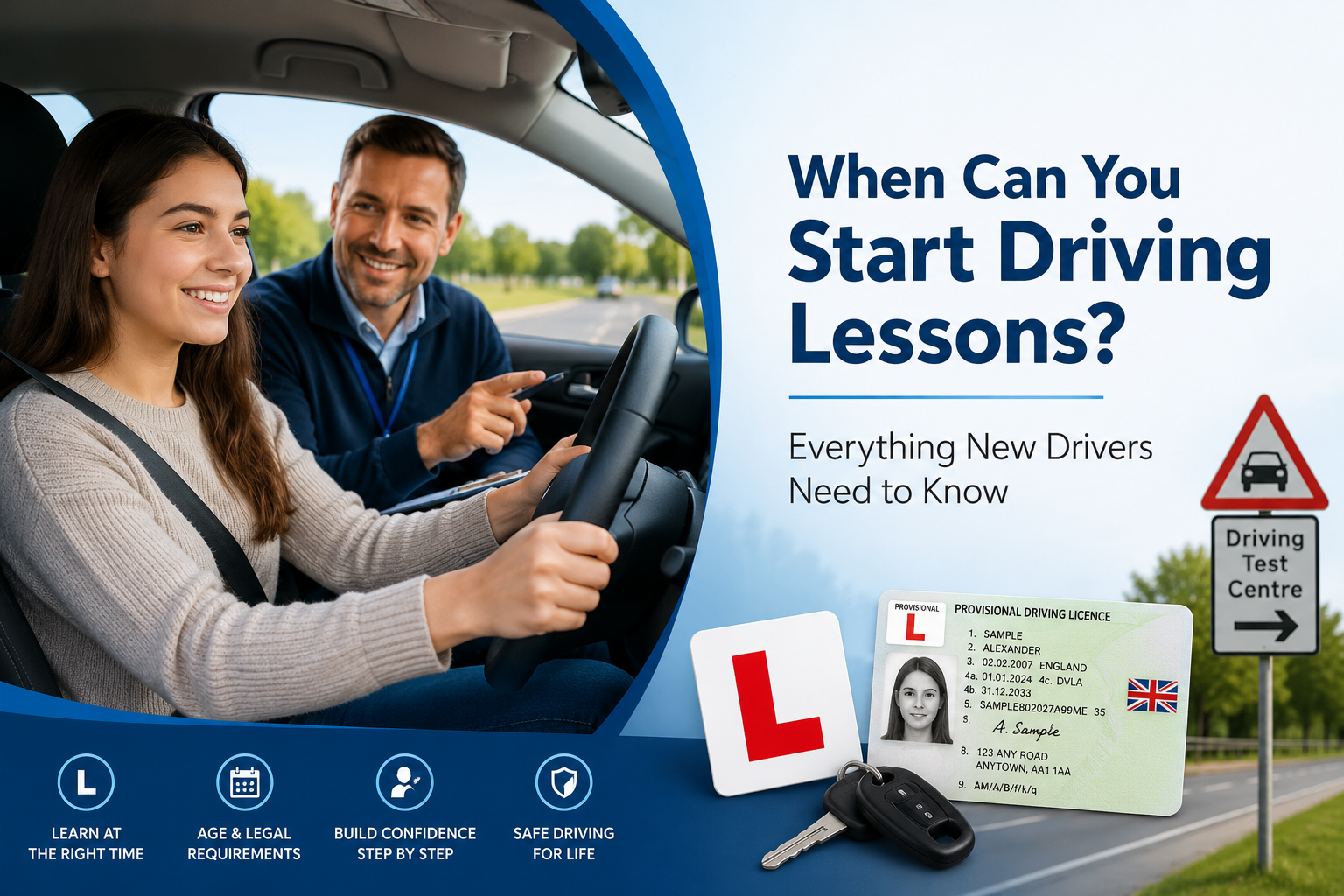
Driving training is a step towards freedom and independence. For many people, getting behind the wheel is a dream come true. However, one thing always remains a recurring topic: When Can You Start Driving Lessons?
If you’re thinking about starting to drive in the UK, it’s crucial to know the rules before you begin. Every step is important – from legal age to obtaining your provisional licence. This guide will make it easy to understand, so you can feel at ease before your first lesson.
What Is the Legal Age to Start Driving Lessons in the UK?
The majority of people begin driving lessons in the UK at age 17. The driver is required to have a valid provisional driving licence before driving on public roadways.
The provisional licence can be obtained from the age of 15 years and 9 months. If you don’t qualify for a special exception, however, you can’t start driving on public roads until you’re 17.
There are some individuals who are able to begin learning at the age of 16, if they are claiming the enhanced rate of the mobility component of Personal Independence Payment (PIP).
Students can develop experience from the beginning if they begin at the proper age. It also provides them with sufficient time to prepare for the theory and practical driving tests.
Why Starting Driving Lessons Early Can Help
Driving lessons are offered at any opportunity, and many learners take them when they are fit to drive. This can be useful for several reasons.
Firstly, for younger students, there is generally much more time available for regular lessons and practice. Secondly, the first driving experience will boost confidence on the road. With practice, students get used to traffic, signs and parking.
The ability to drive becomes better with practice. This means that students who are taking their lessons early tend to become safer and more confident drivers.
What Do You Need Before Your First Lesson?
Before taking their first driving lessons, here are a few important items to have ready.
A Provisional Driving Licence
This is the first requirement under the law. If you don’t have it, you are not allowed to use the public roads.
A Qualified Driving Instructor
Taking lessons from a professional instructor will ensure that you develop safe driving habits right from the start. An excellent instructor will be clear and will help to build confidence in the nervous beginner.
To develop basic knowledge of road signs.
You don’t have to know everything before your first lesson, but it’s easier to learn if you know some of the common road signs.
Wearing comfortable clothes and shoes.
Choose shoes with a flat sole to be able to handle the pedals effectively. Relaxing attire will also ensure you feel comfortable during lessons!
What Happens During Your First Driving Lesson?
You’re typically assigned an easy, relaxed first lesson. A key part of most instructors’ teaching involves getting learners to feel comfortable in the car.
In this lesson, you might:
- How to adjust mirrors and seats
- Basic car controls
- Steering techniques
- Knowing how to disembark safely. Know how to get off safely.
- How to stop correctly
Avoiding blind spots and road awareness.Checking mirrors and being aware of the road.
Students have a tendency to be nervous during their first lesson. This is normal; this is what happens. It takes practice and patience to build confidence.
Instructors at Z Plus Drive aim to establish a gentle learning atmosphere for novices. This will help students to enjoy lessons and to increase their level of confidence on the road.
Can You Practise Driving Outside Lessons?
Yes, learners can practise with their family or friends, but with some conditions.
The supervising driver shall:
- Must be 21 years old or older
- Have a full driving licence for 3 years or more
- Be competent to operate the vehicle
- It should also be L-Plated and have Learner Driver Insurance.
Driving skills can be improved more quickly through extra practice. It also contributes to increasing learner confidence in various road conditions.
How Long Does It Take to Learn to Drive?
There is no particular period of time, as each learner is unique.
Some take to driving more rapidly, others need to take their time. Progress is impacted by several factors, such as:
- Confidence levels
- Frequency of lessons
- Practice outside lessons
- Ability to handle traffic situations
- Knowledge of road regulations.
Progress is frequently improved with regular lessons. There should be little time between lessons or sessions, as skills may be forgotten.
Should You Choose Manual or Automatic Lessons?
This is dependent on the individual’s desire and future driving plans.
Manual Lessons
Learners have to control the gears and clutch in manual cars. Manual driving test entitles you to drive both manual and automatic.
Automatic Lessons
One study found that automatic cars are easier vehicles for beginners to learn to drive because they don’t have a clutch or a gear stick to change gears. Automatic lessons are more popular with nervous learners, who are able to concentrate more on road awareness.
Z Plus Drive provides both manual and automatic driving instruction to accommodate students.
Tips to Prepare Before You Start Driving Lessons
It’s much easier to launch lessons when you’re prepared. Here are a few simple tips.
Stay Positive
Errors are an integral aspect of learning. All good drivers started as novices.
Read the Highway Code.
Learning the meanings behind road signs and traffic signs will make you feel more comfortable in lessons.
Book Lessons Regularly
Pupils make consistent progress through weekly lessons.
Ask Questions
Good instructors encourage learners to ask questions. This helps students understand driving techniques more clearly.
Why Professional Driving Lessons Matter
Professional driving lessons offer a structured learning environment where students can learn to drive safely.
Important skills taught by qualified instructors:
- Hazard awareness
- Safe parking
- Roundabout navigation
- Motorway driving
- Emergency stops
They also work with learners to ensure that they’re ready for the driving test in the proper way.
When selecting a driving school, it is important to find one that is reputable and reliable, as this can help to make the experience smoother and more enjoyable.
Final Thoughts
For most learners in the UK, the answer is simple when it comes to When Can You Start Driving Lessons. Generally, you can start driving with a provisional licence from the age of 17.
Learning to drive is an important life skill. Patience, practice and confidence are the key. You can learn to be a safe, responsible driver with a good teacher and regular lessons.
If you are feeling nervous about your first lesson, or you want to start it as exciting as you can, you will have a tremendous effect by selecting professional instruction. Z Plus Drive assists students in gaining confidence and developing good driving habits from the beginning.
FAQ’s
Is it possible to take driving lessons earlier than 17 years of age in the UK?
The majority of students need to be at least 17 years old. For some people receiving some mobility benefits, some exceptions allow them to begin at 16.
Is a provisional licence required before the first lesson?
Yes. Driving a motor vehicle on public roadways requires having a valid provisional licence.
Is the automatic system easier than manual?
Automatics are easier for many learners since they do not need to shift gears or control the clutch.
How many lessons will it take to learn to drive?
This is different for each student. Others may need more lessons, others need more practice.
Are parents good teachers for their learner drivers?
Yes, parents/friends can supervise practice when they comply with legal requirements.
What do I need to take to my first driving lesson?
Carry a driver’s provisional licence and wear comfortable shoes suitable for driving.
Do weekly lessons provide sufficient practice?
For many students, weekly lessons are the optimal instructional approach. Additional practice can make skills improve more quickly, though.
You can also explore helpful driving guides and learner tips published on platforms like Blogspot, WordPress, Medium, and Weebly, where many instructors and driving schools, such as Driving Lessons, share useful advice for new drivers.