
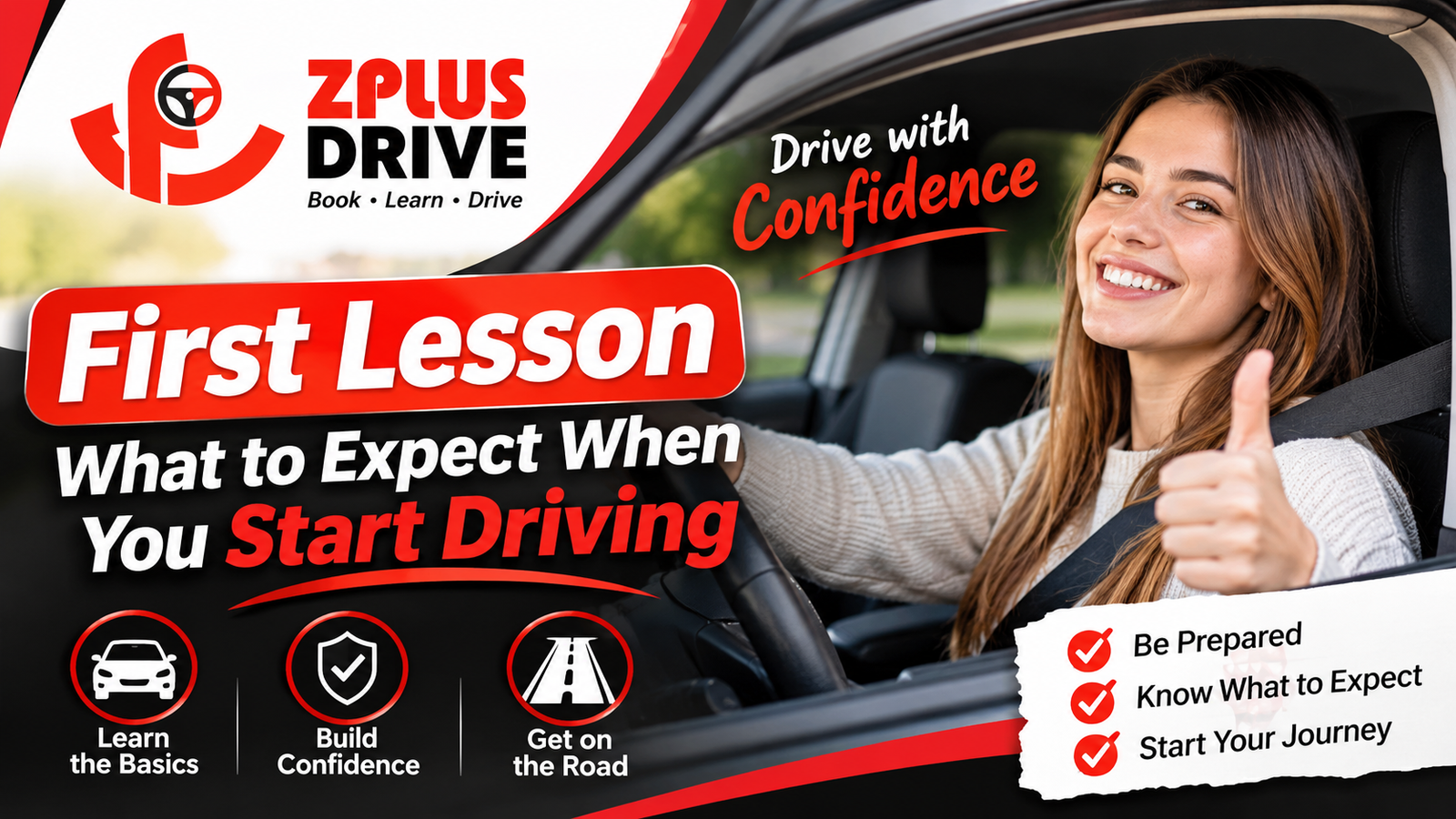
The first lesson at the wheel is a momentous one. It’s the day you start thinking about being behind the wheel and learning how the car works. You might feel excited, nervous, or even a little unsure. That’s completely normal.
Before taking your first lesson as a new driver, you will have many questions. Are you going to drive directly? What if you stall? Do you need to know anything before meeting your instructor?
The good news is, you don’t need any driving experience. Any teacher worth their salt can clearly explain everything and teach you at your own pace.
Best Drive School of Motoring helps novices learn to drive safely and confidently. Here are a few tips for your first lesson.
What Should You Do Before Your First Driving Lesson?
However, if you’re a little prepared, your first experience will be much easier. It’s okay to spend an hour or two learning the most important road signs before you go for a drive. With a little preparation, you can get ready.
First, make sure you have a valid UK provisional driving license. Must comply with legal requirements before operating on public roads. Your teacher might also want to have a DVLA license check code.
Then, select comfortable clothing. Avoid anything that will make it difficult to move. Wear flat shoes with thin soles for good pedal feel. Bring your glasses or contact lenses if you usually wear them to meet driving vision requirements.
A good night’s sleep is also a must. You must be alert and able to make quick decisions while driving, so you should be well rested.
What Happens During Your First Lesson?
Typically, your teacher will start with a brief discussion. They’ll ask if you have driven before and what you want to accomplish. If you’re completely new, there’s no need to worry. They’ll tailor the session to your starting point.
1. These are some of the points you can discuss.
An understanding with the driving instructor.An agreement with the driving instructor.
The teacher will introduce themselves and explain your lesson. This is a good opportunity to raise any concerns.
For example, tell them if you’re unsure about handling the steering wheel or if you’re not comfortable around them. They can explain each step and give you time to process the instructions.
2. Cockpit Drill: Learning the cockpit drill.
Before moving the car, you’ll learn how to prepare your driving position.
The DSSSM cockpit drill is often taught in the course:
- Doors: Make sure all doors are closed.
- Seat: Make sure your seat is positioned so you can reach the pedals comfortably.
- Position: Position the steering wheel in an appropriate position.
- Seatbelt: Securely fasten seatbelts.
- Mirrors: Adjust the mirrors for a clear view.
These tests can seem straightforward. But they help you on each trip.
3. Students will learn about the Car Controls.
Then your teacher will introduce you to the controls that you will need.
If you’re learning in a manual car, you’ll become familiar with the clutch, brake, accelerator, gear stick, and handbrake. You’ll also learn about indicators and mirrors.
If you have selected an automatic car, your instructor will tell you how to use the gear selector as well as how to operate the accelerator and brake.
Don’t rush to recall all the information at once. You’ll have plenty of opportunities to practice.
4. Tackling forward and backward.
If your instructor feels you have mastered the basic controls, he or she may lead your first driving practice in an appropriate quiet location.
You will learn to set up the car, properly inspect the environment, and exit safely. Following that, you will practice slowing down and stopping smoothly.
You may start learning to control the clutch in a manual. The manual learner can also start practicing the biting point.
The engine may stall, or you may release the clutch too quickly. It is a part of the learning process. Please listen to your teacher and repeat if safe.
5. Practicing Basic Steering
As you progress, you may try steering straight and making simple turns.
Your instructor will explain how to hold the steering wheel and stay in control. They’ll also teach you some basic observations so you develop good habits from the get-go.
The aim isn’t to drive around Manchester for hours on your first day. The goal is to clarify the fundamentals and build a foundation for future lessons.
Is It Normal to Feel Nervous During Your First Lesson?
Absolutely. People often experience anxiety before taking their first driving lesson. You may worry about making mistakes or slowing down traffic.
While you’re learning, however, keep this in mind. Don’t expect the driver to be at the pinnacle of his abilities during his first session.
Here are some ways to calm down your jitters:
- Seek clarification: If any instruction is unclear, ask your instructor for clarification.
- Take your time: Don’t learn too much at once.
- Pay attention: Listen to the teacher’s instructions.
- Don’t compare yourself: other learners may learn at a different rate. You are on your own trip.
- Tolerate errors: A stall or missed observation is a learning opportunity!
The instructor’s job is to teach you, not to judge you.
Manual or Automatic: Which First Lesson Should You Choose?
This depends on your tastes and the goals you’ll pursue if you choose to drive.
A manual car has a gear stick and a clutch pedal. However, you’ll need to coordinate the pedals and gears as you drive. This may require practice, but it provides experience with manual vehicles.
The automatic car does not require manual shifting. It has two main pedals, which can make it easier for some learners to get started.
Consider what kind of car you will be driving once you pass your test. Your instructor may go over the differences before you book.
What Should You Ask Your Instructor?
The first lesson is a good time to learn about how your training will be structured. Feel free to ask questions.
There are a few handy examples below:
- What will we be doing in my next lesson?
- What can I do to gain better clutch and control?
- What should I practice in between lessons?
- How will you follow up on my progress?
- If I want to consider longer or more frequent lessons, what should I think about?
These questions will give you a good indication of your strengths and which skills you need to develop.
Why Start Your Driving Journey with Best Drive?
The best driving school can help make learning fun. They offer clear instructions, helpful feedback, and lessons at an appropriate level to match your ability.
Best Drive School of Motoring is a structured school that trains its students to acquire practical driving skills. If you are just beginning to learn to drive or plan to get back in the driver’s seat, you can speak with a representative about your learning needs and choose an appropriate option.
Best Drive teaches both manual and automatic driving lessons. You can also view first-lesson prices and availability on the website.
Our course aims to make you a safe, confident driver who understands road safety and can make sensible decisions.
What Happens After Your First Lesson?
Your instructor will typically recap at the end of your class. They will say what they did well and what they need to practice more.
You may have learned how to move your chair, operate the pedals, get off and stop safely. In your next lesson, you will develop these skills.
After each session, attempt to jot down some of what you learned. This will help you recall helpful information and get ready for the next drive.
Most important of all, practice, practice, practice! Learning is a gradual process and NOT faster through rapid lesson speed!
FAQs About Your First Lesson
1. Will I drive during my first lesson?
Driving will be permitted on the first lesson. Your instructor will typically go over the controls and safety checks first. Once conditions and your starting point allow, you can practice in an appropriate, quiet location.
2. Do I need a provisional license for my first lesson?
Yes. You need a valid provisional driving license before driving on public roads. Your instructor will inspect your license prior to the lesson.
3. How long is a first driving lesson?
Lesson length varies depending on the driving school and booking service available. Many schools offer 1-hour lessons, and longer lessons allow more time to practice.
4. What shoes should I wear for my first lesson?
Wear comfortable flat shoes with thin soles. They let you feel the pedals and how much pressure you put on them. Do not wear high heels or cumbersome shoes.
5. Can I stall the car during my first lesson?
Yes. Stalling often occurs in a novice’s first manual car. Your instructor will help you to use the clutch and the accelerator more smoothly.
6. Do I need to pass my theory test before starting lessons?
No, you can book practical driving lessons before passing the theory test, provided you meet the criteria for learning to drive. You must pass the theory test before taking a practical test.
7. Can I learn in an automatic car?
Yes. If you don’t want to learn how to drive in manual transmission, you can opt to take automatic driving lessons. Be aware that, in an automatic car, passing your test usually limits your license to automatic cars.
8. How many lessons will I need to become a confident driver?
The set doesn’t have a definite size. Your progress will depend on your experience, practice, confidence, and how quickly you learn the skills. Your instructor can help you decide when you are ready for the practical test.
Book Your First Lesson with Best Drive
All seasoned drivers start somewhere. The first lesson is just the start of your journey.
It doesn’t matter if you’re not a knowledge warrior and don’t know everything before you begin. With practice and proper guidance, you’ll gradually become more at ease behind the wheel.
Speak to Best Drive School of Motoring about your needs and schedule your first driving lesson. Take your first step to confident driving.