

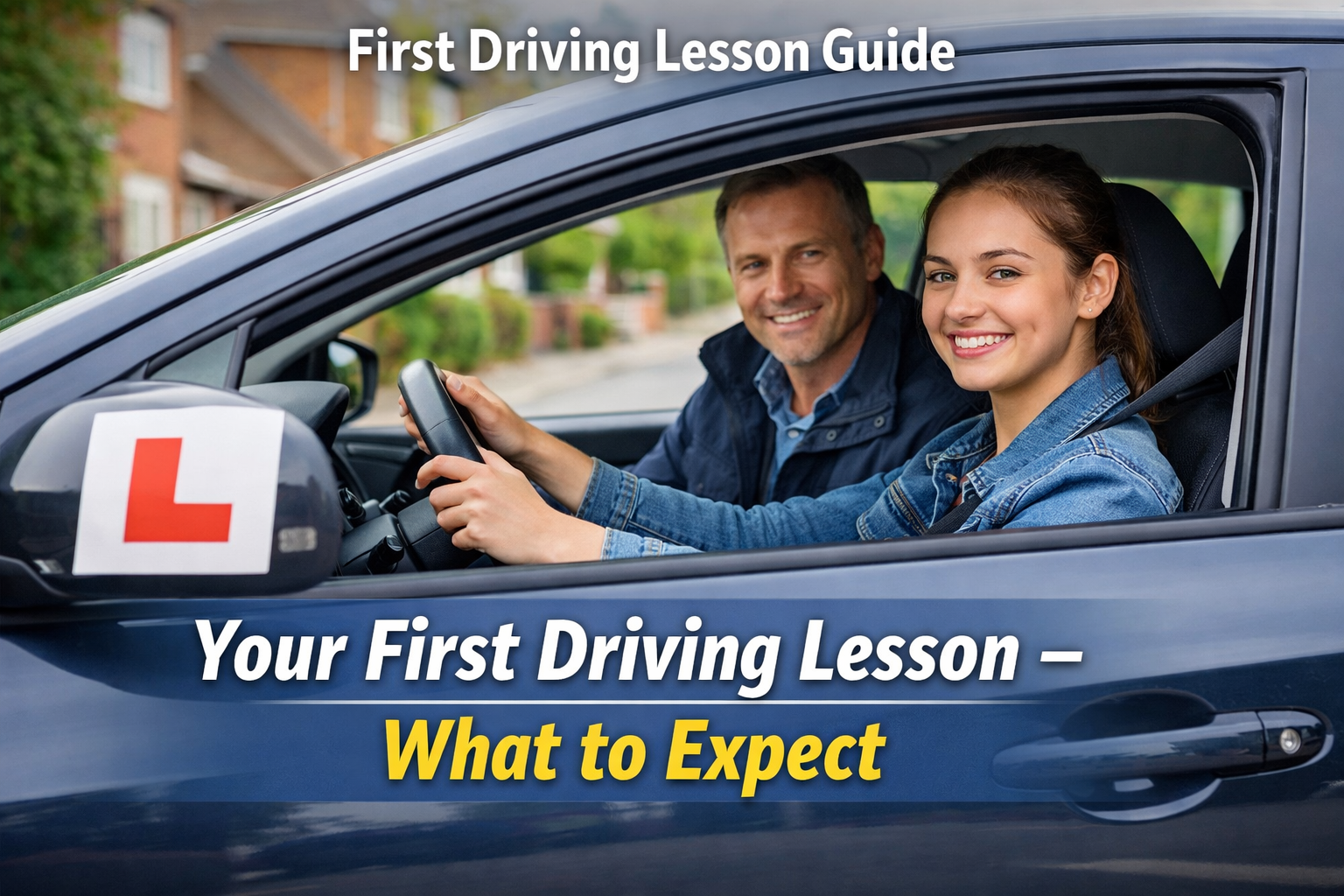
Learning to drive is a big milestone. Your first driving lesson can feel exciting, but it can also make you a little nervous. That is completely normal. Many learners worry about making mistakes or not knowing what to do. The good news is that driving instructors expect beginners to feel this way.
In this guide, you will learn what happens during a first driving lesson and how to prepare for it. If you are planning lessons with Z Plus Drive, this guide will help you feel more confident before you start.
Why Your First Driving Lesson Is Important
Your first lesson is not about driving perfectly. Instead, it is about learning the basics and getting comfortable behind the wheel. A professional instructor will guide you step by step and create a relaxed learning environment.
Most beginners start slowly on quiet roads so they can focus on understanding the car and basic controls. This approach helps learners build confidence from the very beginning.
What Do You Do on Your First Driving Lesson?
Many new learners ask the same question: what do you do on your first driving lesson? The process is simple and structured. Your instructor will guide you through several steps.
1. Meeting Your Driving Instructor
Your lesson usually begins with a short introduction. The instructor may ask questions such as:
-
Have you driven before?
-
Do you know the basic controls of a car?
-
Are you learning manually or automatically?
They may also check your provisional driving licence before starting the lesson. This ensures you are legally allowed to drive.
This short conversation helps the instructor understand your experience level.
2. Driving to a Quiet Practice Area
At the start of the lesson, you will normally sit in the passenger seat. Your instructor will drive to a quiet residential street or industrial area with little traffic.
This allows beginners to learn safely without worrying about busy roads or heavy traffic.
During the drive, the instructor may explain how they check mirrors, signal, or change gears. This helps you observe how driving works before you try it yourself.
3. Learning the Car Controls
Once you reach a safe area, you will swap seats and sit in the driver’s seat. Now the real learning begins.
Your instructor will show you important controls such as:
-
Accelerator
-
Brake
-
Clutch (in manual cars)
-
Gear stick
-
Indicators
-
Handbrake
You will also learn how to start the engine and how the pedals work together.
This part is very important because understanding the controls helps prevent mistakes later.
4. The Cockpit Drill
Before driving, instructors usually teach the cockpit drill, a safety routine used by many driving schools.
The cockpit drill includes checking:
-
Doors – Make sure they are closed properly
-
Seat – Adjust for comfort and control
-
Steering – Position it correctly
-
Seatbelt – Always wear it before driving
-
Mirrors – Adjust them for clear visibility
These checks help drivers stay safe and aware of their surroundings.
5. Moving Off and Stopping the Car
After learning the controls, your instructor will teach you how to safely move the car.
You will usually practice:
-
Starting the engine
-
Moving off slowly
-
Steering the car
-
Stopping safely
Most beginners practice moving off and stopping several times during the first lesson. This helps build confidence and control.
6. Driving in First and Second Gear
Your first driving lesson will be slow and simple. You may only drive in first or second gear and stay below normal road speeds.
The goal is not speed. The goal is control and confidence.
Some learners also practice gentle turns on quiet roads if they feel comfortable.
7. End-of-Lesson Feedback
At the end of the lesson, your instructor will usually drive you back to the starting location.
Before you leave, they may discuss:
-
What you did well
-
What you need to practice
-
What you will learn in the next lesson
This feedback helps you improve quickly.
Tips for a Successful First Driving Lesson
Here are some simple tips to help you enjoy your first lesson.
Stay Relaxed
Everyone feels nervous at first. Take deep breaths and focus on the instructor’s guidance.
Listen Carefully
Your instructor will give clear instructions. Pay attention and ask questions if something is not clear.
Wear Comfortable Shoes
Avoid heavy boots or high heels. Comfortable shoes help you control the pedals better.
Bring Your Provisional Licence
You must have it with you before starting your lesson.
Do Not Worry About Mistakes
Mistakes are part of learning. Even experienced drivers once struggled with their first lesson.
Why Choose Professional Driving Lessons?
Learning with a qualified instructor makes a big difference. A professional driving school like Z Plus Drive provides structured lessons that help beginners build skills safely.
Professional instructors:
-
Teach safe driving habits
-
Explain road rules clearly
-
Build confidence step by step
-
Prepare you for the practical driving test
With the right guidance, learning to drive becomes much easier.
e.g ( blogspot.com or wordpress.com, Medium.com, Weebly.com)
Frequently Asked Questions (FAQs)
1. How long is a first driving lesson?
Most first driving lessons last between 60 and 120 minutes. This gives enough time to learn the basics and practice moving the car.
2. Will I drive on my first driving lesson?
Yes. However, your instructor will first explain the car controls and safety checks before letting you drive.
3. What should I bring to my first driving lesson?
You should bring your provisional driving licence, comfortable shoes, and glasses if you need them for driving.
4. Do I need to know anything before my first lesson?
No experience is required. Your instructor will teach you everything from the beginning.
5. Is it normal to feel nervous during the first driving lesson?
Yes. Almost every learner feels nervous at first. With practice and guidance, your confidence will quickly grow.
6. How many driving lessons does it take to pass the test?
The number varies for each learner. Many drivers need around 40–50 hours of lessons before they are ready for the test.
Final Thoughts
Your first driving lesson is the beginning of an exciting journey. It is normal to feel nervous, but remember that every driver once started exactly where you are now.
By understanding what to expect during your first driving lesson, you can arrive prepared and confident. With practice, patience, and the support of a professional instructor, you will quickly improve your driving skills.
Take your time, enjoy the process, and celebrate each small success along the way.