
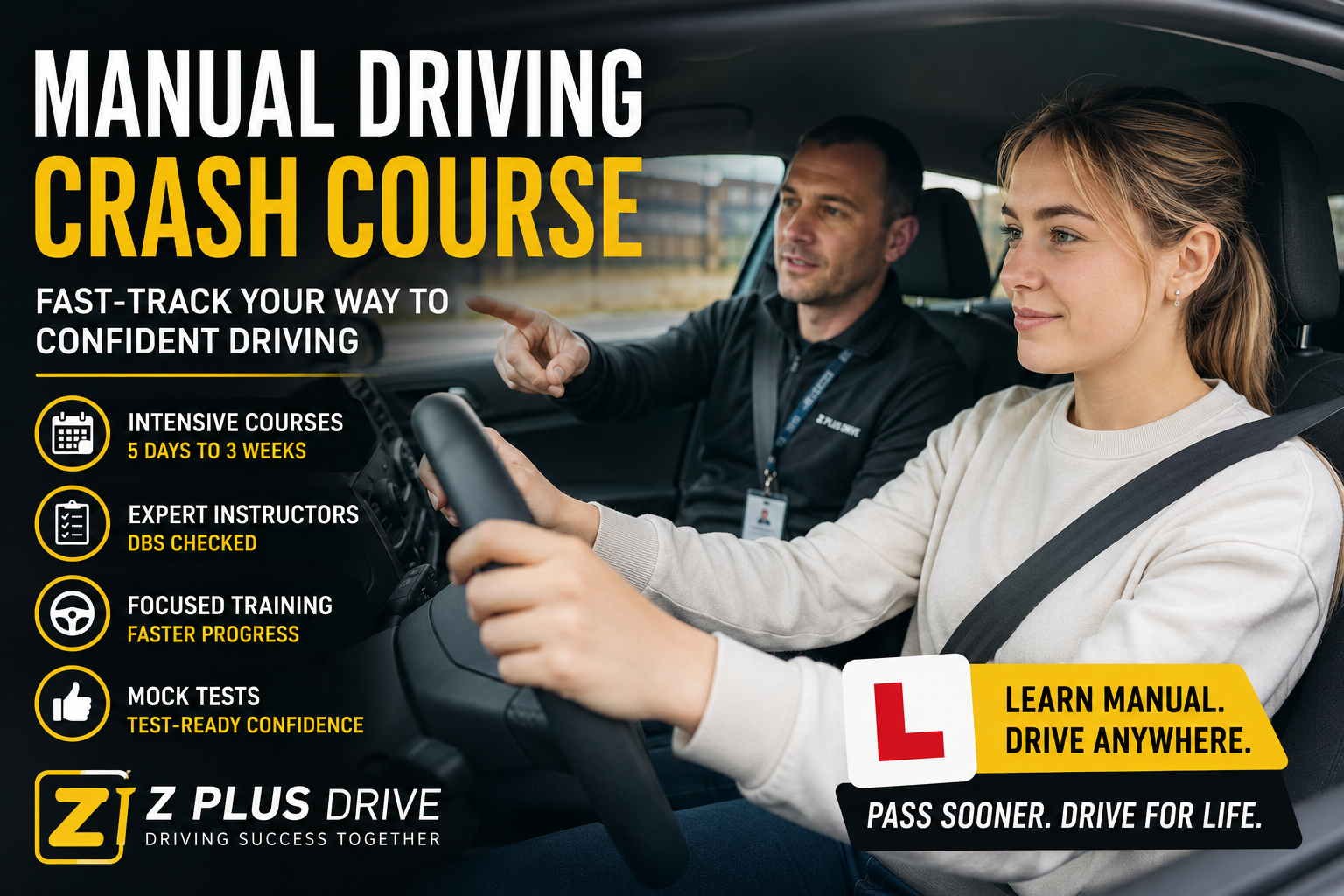
Learning to drive doesn’t have to drag on for months. A manual driving crash course gives you a focused, intensive way to build real driving skills in a short space of time. Instead of spreading lessons out, you get consistent practice that actually sticks. Most learners find that this approach helps confidence grow more quickly, especially when everything stays fresh in their minds. At Z Plus Drive, we’ve seen how the right structure can turn nervous beginners into test-ready drivers faster than expected.
What Is a Manual Driving Crash Course?
A manual driving crash course is an intensive driving programme designed to help you pass your test in days or weeks rather than months. Instead of one lesson a week, you’ll typically drive daily for several hours with a qualified instructor.
That consistency makes a big difference. You don’t spend half the lesson remembering what you did last time. You just carry on building skills.
Most crash courses include:
- Full driving lessons over consecutive days
- Mock driving tests
- Highway and city driving practice
- Manoeuvres like bay parking and parallel parking
- Test preparation tailored to your weak points
To be fair, it’s not for everyone. But if you learn best through repetition, it’s one of the fastest ways to get test-ready.
Who Should Take a Crash Course Manual Driving Programme?
A crash course manual driving programme suits learners who want quicker results and can handle an intensive learning pace.
It’s ideal if you:
- Already have some basic driving experience
- Have failed a driving test and want a quick retake
- Need a licence urgently for work or travel
- Prefer focused learning rather than weekly lessons
Most learners find it especially useful after a long gap between lessons. That’s because daily practice helps rebuild muscle memory quickly.
However, if you get overwhelmed easily or struggle with pressure, a slower lesson plan might suit you better. A lot depends on your confidence level behind the wheel.
Benefits of Intensive Manual Driving Lessons
There’s a reason crash course manual driving programmes are becoming more popular across the UK. They offer several real advantages that traditional lessons can’t always match.
Faster Progress
When you drive every day, you naturally improve more quickly. You’re not spending time revisiting forgotten skills.
Better Retention
Short gaps between lessons mean you remember more. Simple as that.
Focused Learning
Your instructor can quickly spot weak areas and fix them without delay.
Confidence Boost
Many learners feel nervous at the start, but daily driving helps reduce anxiety quite fast.
Test Readiness
You’ll get used to mock tests, so the real exam feels less intimidating.
To be honest, most learners are surprised by how quickly things start to click.
How Long Does a Manual Driving Crash Course Take?
The duration of a manual driving crash course depends on your current experience and how quickly you learn.
Typical course lengths include:
- 5–7 days for experienced learners
- 1–2 weeks for intermediate learners
- 2–3 weeks for beginners
Each day usually includes 2 to 6 hours of driving, sometimes split into sessions to avoid fatigue.
Most instructors at Z Plus Drive will assess your ability first and suggest a suitable plan. There’s no one-size-fits-all approach here. Some people pick things up quickly, while others need more repetition.
And that’s perfectly normal.
What Happens During the Course?
A crash-course manual driving programme is structured yet flexible, depending on your progress.
Here’s what a typical journey looks like:
Day 1–2: Basics and Control
You’ll cover:
- Clutch control
- Moving off and stopping
- Steering control
- Basic road positioning
Most learners feel a bit rusty here, especially if they’ve had a gap in lessons.
Day 3–5: Road Skills Development
This stage focuses on:
- Roundabouts
- Junctions
- Lane discipline
- Hill starts
Things start to feel more natural here. You begin reacting instead of thinking too hard.
Day 6 onwards: Test Preparation
You’ll work on:
- Mock driving tests
- Independent driving
- Navigation without prompts
- Fixing recurring mistakes
Instructors usually get quite strict at this stage. That’s intentional. It prepares you for the real test pressure.
Manual vs Automatic Intensive Courses
Choosing between manual and automatic is a big decision, especially for intensive learning.
A manual driving crash course gives you more flexibility in the long run. You’ll be able to drive both manual and automatic cars after passing.
Manual courses involve:
- Gear changes
- Clutch control
- More coordination
Automatic courses are simpler since there are no clutch or gear changes, but they limit you to automatic vehicles only.
Most UK learners still choose manual because it offers more freedom and can be more cost-effective when buying a car later.
To be fair, manual takes more effort at the start. But once it clicks, it really clicks.
Tips to Pass Faster in a Manual Car
If you’re taking a crash course manual driving programme, a few habits can really speed things up.
Practise clutch control early
Get comfortable with biting point control. It makes everything easier later.
Don’t rush gear changes
Smoothness matters more than speed.
Stay calm at junctions
Most mistakes happen when learners panic at roundabouts or busy junctions.
Ask questions immediately
Don’t wait. Fix issues while they’re fresh.
Take mock tests seriously
Treat them like the real thing. It builds mental strength.
Most learners who pass quickly aren’t perfect drivers—they’re consistent ones.
Why Choose Z Plus Drive
At Z Plus Drive, we understand that learning to drive can feel stressful, especially when time is limited. That’s why our manual driving crash course programmes are structured, realistic, and supportive.
We focus on:
- Patient, qualified instructors
- Personalised lesson planning
- Realistic mock test conditions
- Flexible scheduling
- Honest progress feedback
We don’t rush learners just for the sake of it. Instead, we focus on making sure you’re actually ready for your test—not just booked for one.
Many learners tell us they finally “get it” after switching to an intensive approach. That’s because consistency matters more than occasional lessons.
If you’re ready to take the next step, Z Plus Drive is here to help you get test-ready without unnecessary delays. Book your crash course manual driving programme today and start moving towards your licence with confidence.
Conclusion
A manual driving crash course is one of the quickest and most effective ways to learn driving if you’re ready for an intensive approach. It builds confidence through repetition, strengthens real-world skills, and prepares you for the driving test in a focused timeframe.
It’s not about rushing. It’s about learning properly in a shorter burst. If you’re committed and willing to practise daily, you’ll likely see progress faster than expected.
And honestly, once everything starts to fall into place, it feels less like a course and more like real independence on the road.
FAQs
1. Is a manual driving crash course suitable for beginners?
Yes, but it depends on how quickly you adapt. Beginners may need a longer course to build confidence.
2. How many hours a day do I need to drive?
Most intensive courses include 2 to 6 hours per day, depending on your level.
3. Can I pass in just one week?
Some learners do, but it depends on experience, confidence, and how quickly you pick up skills.
4. What if I struggle with clutch control?
That’s very common. Instructors spend extra time helping you master it before moving on.
5. Is crash course manual driving more expensive?
It can seem pricier upfront, but it often reduces the total number of lessons needed.
6. What happens if I’m not test-ready at the end?
You can extend your course or take extra lessons until you’re fully prepared.
7. Do I need a theory test before starting?
Yes, you must pass your theory test before booking your practical driving test.
You can also explore helpful driving guides and learner tips published on platforms like Blogspot, WordPress, Medium, and Weebly, where many instructors and driving schools, such as Driving Lessons, share useful advice for new drivers.